Showing posts with label prayer. Show all posts

Tuesday, July 8, 2014

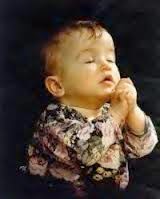
Learning to Pray (Moving past goo goo, ga ga)

In "Learning to Pray (An Introduction)" we began to look at prayer at a very basic level, from the perspective of an infant who is learning to communicate with his or her parents through non-verbal means and defined Christian prayer as relationship with Christ.

In the pursuit of education, one's ability to understand and expound that which is learned is made possible by a gradual development of the curriculum. As this development continues, the learner is best served by occasional reviews which reinforce what has been learned and further enables the learner to continually progress in his or her studies.

The same is true with the formation of faith and prayer. This is not to suggest that the approach to these should be undertaken in a merely academic manner. Again, prayer is relationship with Christ. We are not just seeking to know about Him, but rather to KNOW Him.

And yet, when one sets out to know someone, if that person is really important to him or her, does he or she not seek to learn all that is possible about that person? If you have ever been in a relationship with someone, and that relationship was very important to you, then you understand.

So it is with our relationship with Christ and our understanding of prayer as we continue.

While the infant and parents begin to love each other through non-verbal means of communication, the development of that relationship is enhanced as the infant learns to speak.

At first it begins with "Goo goo, ga ga." Both the infant and the parents have no idea what those sounds are, but those sounds serve to reinforce the love that has already been substantiated in the relationship.

Gradually, the child forms the ability to enunciate a word or two.

How special must it be for that child as he or she realizes that its parents understand him or her! Likewise, the proud and loving parents embrace the child's limited ability to verbally communicate.

Stay with me on this baby thing, there is a purpose here.

How does the child learn to speak? The parents have spent a considerable amount of time speaking to him or her, especially focusing on those important words, "Mommy" and "Daddy."

“This is how you are to pray: Our Father..." - Matthew 6: 9

What joy the parents experience with the simple yet beautiful music of their child's voice speaking their name! What joy the child experiences when he or she realizes, "Mommy and Daddy understand me!"

The child's ability to speak these simple words does not signal his or her readiness to present a thesis, nor do the parents expect such. They are pleased and satisfied with the sound of their names for now.

When the Christian seeks to learn how to pray, where does he or she turn if not to Christ Himself?

"Lord, teach us to pray..." - Luke 11:1

Jesus knew the joy that both the Father and we would experience with these first words:

“When you pray, say: Father, hallowed be your name, your kingdom come." - Luke 11:2

We all face troubles, some pain, loss, or other suffering. These are moments when it's hard to know how to pray. In our suffering we may feel like little helpless children, struggling to form the right words.

Jesus understands this as well. Suffering on the cross, in calling to God the Father, Jesus uses the word, "Abba." As I have written about before, this is the word that little children used for their fathers; "Daddy!"

Assignment for the day: Say those first words of the Our Father, but use the word "Daddy."  "Daddy, hallowed be your name, your kingdom come." Reflect on that and the joy that it gives to God to hear your voice speaking to Him, blessing His Name. I bet you say it more than once.

Monday, July 7, 2014

Learning to Pray (An Introduction)

"For me, prayer is a surge of the heart; it is a simple look turned toward heaven, it is a cry of recognition and of love, embracing both trial and joy." - Saint Thérèse of Lisieux

"What is absolutely essential to the Christian life?"

I suspect most Christians, should they ponder this question for even a brief moment, would conclude that prayer is essential to the Christian life.

I bet there have been many times you've heard (or said) "I would really like to have a better prayer life." For the Christian, what is really being said is "I seek to have a better relationship with Christ."

I propose that regardless of the state of our own personal prayer life, there is always room to grow and improve. For if Christian prayer is relationship with Christ, does the true Christian not seek to constantly and continually grow and improve that relationship?

While we may seek a better prayer life, we may often find ourselves to be inadequate or "dry". We might set out with some plan that soon thereafter falls by the wayside. Why is that?

Perhaps it is our misunderstanding of Christian prayer at the very basic and fundamental level. Do you think that prayer is all about words?

Does a baby understand it is loved by its parents? How is that? Do you think it is because the baby understands its parents when they tell him or her "I love you"? Of course not! The baby understands that the parent loves him or her because of the parent's actions!

Ah, the baby's ability to understand that it is loved begins with the actions of the parent. As the baby learns and grows, the relationship between baby and parents grow too. The baby learns to express it's love for his or her parents in ways that they most certainly understand. This is true long before the baby is able to express such affection through verbal communication.

Think of yourself as that baby and God as the parent. We know how to do this! It is at the core of our being, and that should be a comfort to anyone who thinks, "I don't know how to pray."

Kendra and I recently went on a Marriage Encounter weekend. On the second evening of the weekend while Kendra and I were reflecting on the day, we discussed one of the presenting couples. "Have you noticed how Judy looks at Ron?" I asked. "How couldn't I?" Kendra responded.

We went on to discuss some of the little ways that each member of the presenting couples had displayed love and affection for each other. These were all non-verbal means. They were each able to visibly express their love for each other to one another and to us without saying a word.

If our prayer is relationship with Christ, then we are able to understand His love through non-verbal means. We are able to express our love to Him through non-verbal means. Others are able to visibly recognize our relationship with Christ through such means, and this all works toward some benefit in the salvific plan of God.

Assignment for the day: Think of someone special in your life today. That person is a gift from God to you; a non-verbal means of His communication to you. Think about that gift today - and smile.

There, you did it! What a nice little prayer.

Wednesday, March 5, 2014

Not Catholic? Great! Read this about Lent. Catholic? You too!

Today is Ash Wednesday, and once again we begin Lent.

Now if you're not Catholic, watching Catholics this time of year can be confusing, and I know that for some it even becomes frustrating.

Even if you're Catholic, you might not be clear about what the purpose of Lent is. Maybe you just do the same thing over and over again each year without a real plan just because that's what you've always done. Maybe you're just doing what you think the Church tells you to do.

"Tells you to do?" Yeh, that can be a real hangup if you're not Catholic. But that's also why you stand to benefit greatly from observing Lenten practices; maybe more than many of your Catholic friends.

Well, what I am saying is that the real benefit of the Lenten journey is the result of an interior desire to improve your relationship with God. That means doing it because it's the right thing to do and you want to do it.

Improving your relationship with God is about conversion, an on-going process of conforming to the Christian life. That means conversion really relates to our disposition with ourselves and others as well as with God.

We accomplish conversion through examination of conscience, admitting our faults, reconciliation, spiritual direction, empathy and action with regard to the poor and suffering, working for and defending what is right and just, enduring suffering and persecution ("take up your cross daily"), etc.

During Lent, we give special attention to the need for prayer, fasting, and almsgiving. I've used the term "rightly ordered" before, and I will use it here again. To be clear, this means the correct order of things. Rightly ordered, prayer, fasting, and almsgiving are expressions of interior penance.

In Matthew 6: 1-18, Jesus presents the proper order as coming from within. Some people get hung up on what He states not to do, but the point He makes is to DO them, but to do them from the heart, the interior.

Now that penance word. Penance expresses our contrition for our sins and our intention to turn away from sin and our attachment to it. Interior penance is best expressed through - you guessed it - prayer, fasting, and almsgivng.

So if the correct order comes from within, why does the Church insist Catholics focus more closely on these during Lent? Because we're human. We have a tendency to forget and/or neglect how to do something without practice.

That is why we say we are "practicing penance." Hopefully, if we practice well enough, we'll get good at it and begin to do it on our own. Perhaps recognizing the benefits of the outward actions will prompt the interior motivation I have been speaking of.

Okay, so today is Ash Wednesday. It's a day of fasting and abstinence. And there'll be more abstaining on Fridays during Lent. You probably get the "fasting" part, but "abstinence?"

Abstaining from meat is a form of penance. It is a very small sacrifice which reminds us of THE sacrifice of Jesus on the cross.

When the Church says "do not eat meat on Fridays during Lent", unfortunately it is the outward act which receives the attention. However, the Church is giving us this very small and very simple directive, a precept of the Church, to help us to recognize that we are to grow, to mature beyond a small mandate onto deeper expressions which spring from the interior conversion of the heart.

Enough for today. I hope you find this useful.

Monday, February 25, 2013

"You did it for Me"; Help a sister in need

Lisa Graas, also known as Catholic Bandita and @CatholicLisa can really use our prayers and assistance at the moment.

Although that should really be all the information we need, I want to say that Lisa is a faithful Catholic MOM, who already has some struggles and difficulties that most do not.

Lisa's open and straightforward blogging has helped many people, including myself, to think and sometimes re-think (and sometime re-re-think) about Who Jesus is and what place we really provide for Him in our lives (as in, do we recognize that it is HE Who has provided us with life and all things in it). She has been a faithful witness to the Catholic Faith and its teachings. Oh yeh, another good convert example.

Now, Lisa and her children are in need of dire prayer and assistance. How dire? Well, they need to find affordable housing as soon as possible.

And the king will say to them in reply, ‘Amen, I say to you, whatever you did for one of these least brothers of mine, you did for me.’ - Matthew 25:40
You can donate directly to Lisa by clicking on this link and clicking on donate on the left-side of the page (half-way down) - just takes a minute.

NOTE: If her site is down, you can donate on paypal using her e-mail address GoCatholic@gmail.com


And thanks to Sofia Guerra (Always Catholic Blog) for bringing this to light.

+++

Wednesday, February 20, 2013

So you don't make the Sign of the Cross?

The very first prayer that my mother taught me was to make the Sign of the Cross, saying as I did so, "In the Name of the Father, and of the Son, and of the Holy Spirit".

Now, I have noticed that many Christians do not make the Sign of the Cross, and I'm curious as to why one would be reluctant to do so.

After all, making the Sign of the Cross is an outward sign which tells others "I am a Christian. I am in this world, but I am not of this world. I belong to Jesus. It is by this Sign that I have been grafted on to my Savior  thus making me an adopted child of God."

The Sign of the Cross.......THE Cross
  • reminds the Christian that all that we do should be done in God's Name
  • is the altar of the New Covenant
  • is the tree of death which became the tree of life
  • is the means by which Jesus revealed His kingship, and by which God's kingdom is established
  • is the instrument of our salvation
  • is a reality of our responsibility for the pain which Jesus suffered for us
  • is a reminder that we are to take up our own cross daily
  • is a reminder that the Cross paves the way to follow Jesus
  • is the way that leads to holiness
  • and so much more

Isn't it time that we once again remind the world of the great contradiction; the Cross, our true HOPE?

The sign of the cross, on the threshold of the celebration, marks with the imprint of Christ the one who is going to belong to him and signifies the grace of the redemption Christ won for us by his cross. - Catechism 1235

The Christian begins his day, his prayers, and his activities with the Sign of the Cross: "in the name of the Father and of the Son and of the Holy Spirit. Amen." The baptized person dedicates the day to the glory of God and calls on the Savior's grace which lets him act in the Spirit as a child of the Father. The sign of the cross strengthens us in temptations and difficulties. - Catechism 2157
+ + +

Tuesday, January 15, 2013

Why did God make you?

Why did God make you?

This morning, when I read "How to Practice Catholicism" by Lisa Graas, there were several thoughts I had on the subject.

First, she writes

It’s one thing to be Catholic and quite another to practice Catholicism.

It sure is. A former pastor of mine used to say quite frequently "Being a Catholic is more than having your membership card."

If you have a membership card to the gym, but never use it, what good is it? And when you need to use those muscles that you would have built up at the gym, they probably won't respond properly.

and later, this

That is why study is necessary, but study is just an initial step. After you know what to practice, you can then become a practicing Catholic.

Back to the membership card thingee (that one's for my wife); If you do use the card, go to the gym to work-out, but don't take the time to learn how to use the equipment properly, there's a good chance you will hurt yourself and possibly others as well.

continuing

As the Church is employing social media more and more in bringing Christ to the world, we would all do well to remember our brokenness and to understand that it is not our intellectual brilliance in writing and creating fancy graphics that will bring souls to Him as much as it is our prayers and our desire to always seek to get to know Him better ourselves...

No doubt, I am not blowing anyone over with my "intellectual brilliance". I hope you enjoy reading this blog, but I sure hope the things I post "about me" are really about how much work God has left to do with me.

Over the course of the last 7 1/2 years, I have lost over 110 pounds. Honestly, sometimes I can get lazy or careless about what and how much I eat. This is dangerous, and the same is true if we become "comfortable" with our relationship with God. We must always seek Him in prayer, especially when it seems "difficult" or even worse "unnecessary" to pray.

and finally

If we don’t know Jesus personally, we cannot possibly project the real Jesus to the world. What’s more, if we don’t get to know Jesus, we will never get to know our true selves. Our hearts were made for loving Him. Know Him, love Him, serve Him.

This last comment is so "back to the basics" of Catholicism. Do you remember the Baltimore Catechism ("there he goes")? Well, maybe you don't. Back in the 70's, when I was a kid, I know there was an effort to get rid of all that "rigidness". Ugggggg!!!!!

The Baltimore Catechism (of 1891), in "Lesson First" (Question #6), states

6. Q. Why did God make you?
A. God made me to know Him, to love Him, and to serve Him in this world, and to be happy with Him for ever in heaven

So much is said in that little question and answer. Isn't that what so many are searching for in asking "Why am I here?"

I have often posted about liturgy, the Sacraments, etc. These may seem to some to "not really matter" as long as "I have a personal relationship with God". This is exactly why I post such things. Because how we worship God does matter to Him, and our relationship with Him is tied to and perfected in their PRACTICE.

Those who with God's help have welcomed Christ's call and freely responded to it are urged on by love of Christ to proclaim the Good News everywhere in the world. This treasure, received from the apostles, has been faithfully guarded by their successors. All Christ's faithful are called to hand it on from generation to generation, by professing the faith, by living it in fraternal sharing, and by celebrating it in liturgy and prayer - (Catechism 3)

Why did God make you?

God made you to know Him, to love Him, and to serve Him in this world, and to be happy with Him for ever in heaven

Wednesday, January 9, 2013

The Anchoress Made Me Feel Uncomfortable

Elizabeth Scalia (The Anchoress over at Patheos) made me feel uncomfortable. This is actually a good thing though. Years ago, someone told me "If you're comfortable with where you are in your relationship with God, you're probably not where you should be." Perhaps I have once again become a little too comfortable.

In her blog post "Failing…in love again", Elizabeth writes:

"Be careful what you ask for in prayer. God takes you at your word, and He is an abidingly patient but thorough teacher, with unsoundable depths."

I know this all too well. I have experienced this in my own life. As I reflect on a "me" I hardly recognize, I am reminded that God calls to us, even at (especially at) our darkest and loneliness moments. The truly sincere heart that reaches out to God and is willing to finally "let go" will truly be blessed. But there is always some "pruning". And it is not us, but God who must do the pruning.

Pruning: To cut away what is unwanted or superfluous; To cut off or cut back parts of for better shape or more fruitful growth -Webster

In August, I posted "Hurricane Isaac Reminds Me of How I Got Here" in which I shared the story of my family's exodus from Louisiana to Texas during Hurricane Katrina.

In that post I linked to a lay witness I gave several years ago in my parish, during which I revealed:

"I attended Catholic schools from Kindergarten through High School. My parents were involved in our Church and in the schools I attended. We never missed Mass, and God was not a Sunday-only topic in our home. Despite those things my own Faith formation still fell short and, suffice to say that somewhere along the way I re-fashioned God to fit my own needs. It wasn't something I was conscious of, and I am fairly certain that it wasn't evident to others around me until I had made certain choices in my life and had closed myself off to them or anyone else. By the time I was ready to admit to myself that I had dug a pretty deep hole, it was already caving in. By my own actions, I had separated myself from God, from His Church, and the Sacraments."

I have been contemplating writing more about some of the events, or choices rather, that have led to where I am now in my relationship with God. But that's where Elizabeth's post got to the "uncomfortable" part. I started thinking about that "me I hardly recognize", and I remembered....

I remembered that prayer, that simple prayer with a most sincere heart;

"God, do for me what I am afraid to do for myself. Take away what you don't want me to have, and give me only what You Will."

Am I brave enough to pray that prayer today? Uncomfortable.

Thursday, August 9, 2012

The Voices In My Head - Part 2; Counterfeit Conscience

In Part 1 I began to address the question, "How do I know if it is God speaking to me, or if it is all in my head?", touching on how and where He speaks, and how conscience is the messenger helping to interpret His voice for us.

But for the Christian, conscience needs to be trained.  It requires proper formation.  A properly formed conscience helps us to make choices based on reason, but in conformity with the Will of God.

When I was in the grocery business, we trained our cashiers how to detect counterfeit money.  To detect counterfeit bills, one does not study the counterfeit.  One studies the real bill, seeks to learn all that is possible about what a real bill looks like.  Properly trained to recognize the real bill, the one with true value, the cashier would be better equipped to recognize the worthless counterfeit bill.

It is also important to note that as cashiers became better equipped to recognize truth over counterfeit, the counterfeiters found better ways to trick them.  This brought on changes in the way money is printed; with special portraits, bands and shifting ink, among others.  Cashiers are now also given special pens to aid them in this effort.  Even as they become more and more equipped, given more and more tools to work with, the counterfeiters continue to scheme.

And so it is today, that we Christians have plenty of "tools" and "aids" at our disposal; much more so than our parents and grandparents and so on.  However, the "counterfeiters", the ones who seek to trick us into accepting false reason, are very good at their game.  More importantly, if we become lazy and do not use the tools at our disposal, we will most certainly be duped!

So it is clear to see, that the formation of the Christian conscience is a life long process.  We have to work at it and stay vigilant against the tactics of the enemies of faith.  Like counterfeiters, they seek to distort true faith, masking their lies with half truths.

Thanks be to God!  We have lots of tools.  We have prayer, which teaches us to place our trust in God and to cooperate with His Will.  We have the great gift of the Word of God, the Holy Scriptures and authentic blueprint of faith.  We have the Church through which we exercise our faith, are renewed and refreshed by the Sacraments and by which we join our prayer to the Body of Christ, whose head is Jesus in Whom all Truth resides.

Next time; more about avoiding counterfeit conscience and erroneous judgement.